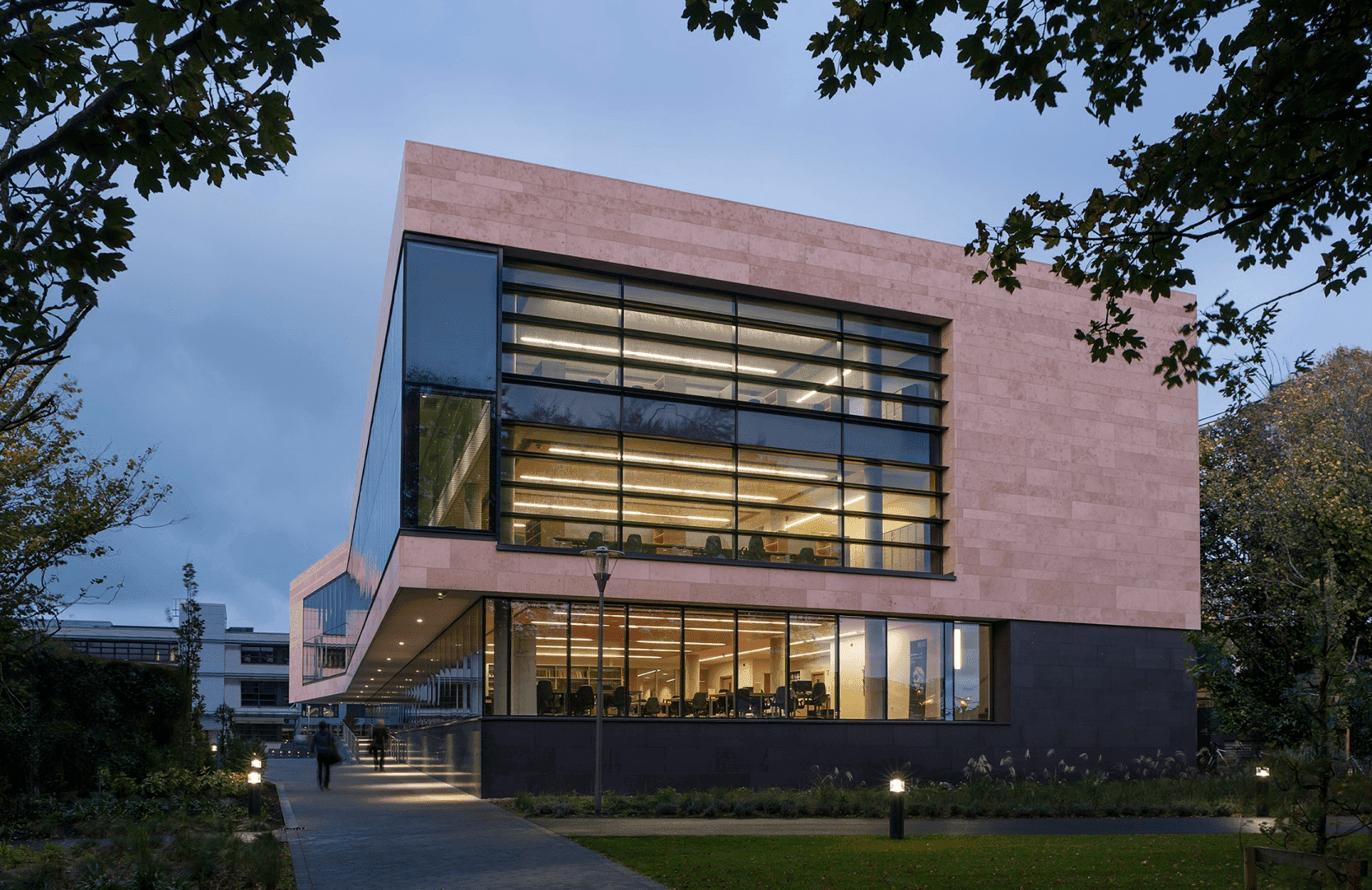
Hardiman Library, University of Galway
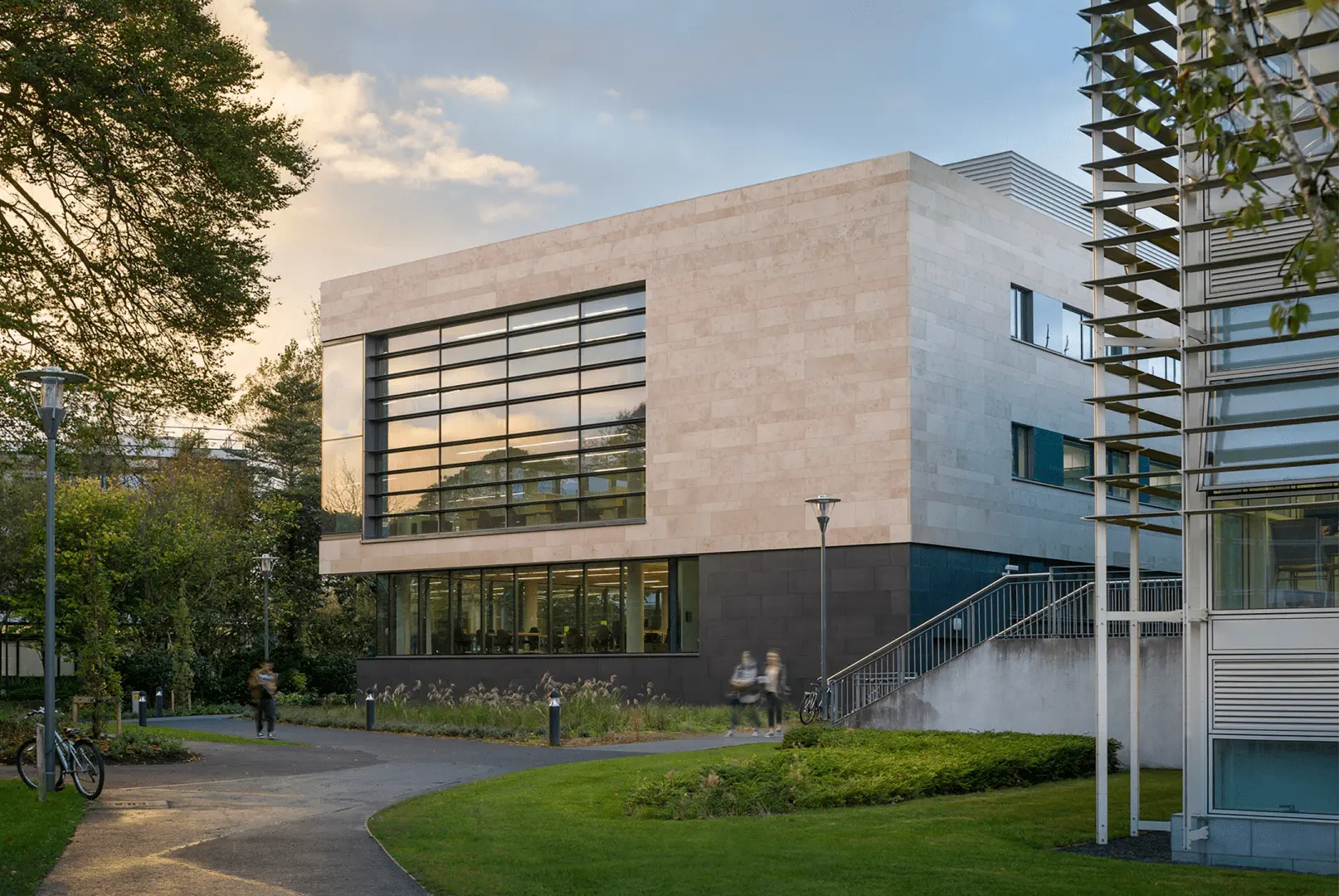
A contemporary extension and refurbishment delivering a high-performance research library environment.
- Location Galway, Ireland
- Client University of Galway
- Project Hardiman Building
- Scale 6,500 SQM
The Challenge
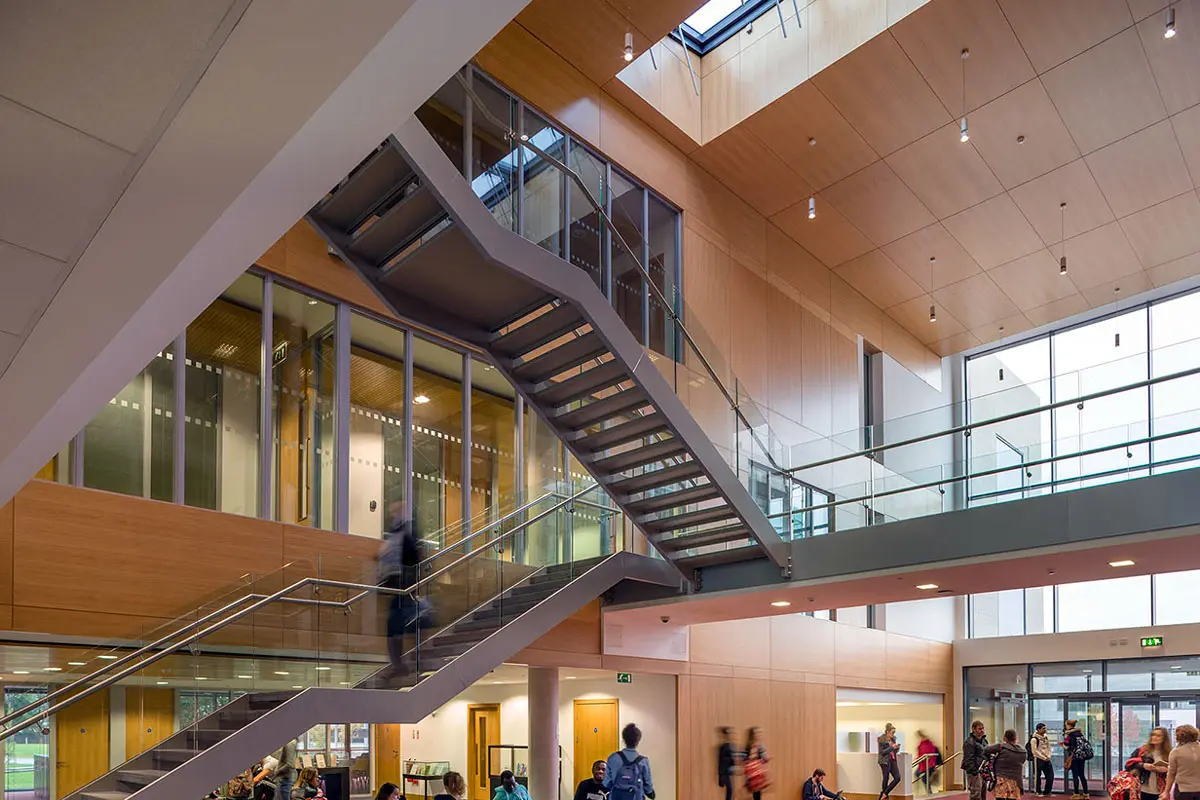
The project required the integration of a new research library extension with the existing Hardiman Library, a protected structure dating from 1978. A key objective was to enhance connectivity between old and new through a three-storey atrium, while preserving the architectural integrity of the original building. The design needed to achieve a careful balance between intervention and conservation, maintain character while improving performance, accessibility and environmental quality.
The Story
A light-touch adjacency strategy was adopted, ensuring minimal physical impact on the existing structure while maximising visual connection through the new atrium. The building was designed with a strong sustainable agenda, achieving a BER A rating. High-performance façades incorporate advanced solar shading and daylight optimisation, while natural ventilation strategies are employed throughout circulation spaces and the atrium. Internally, raised access floors enable displacement ventilation, supporting an efficient and adaptable environment.
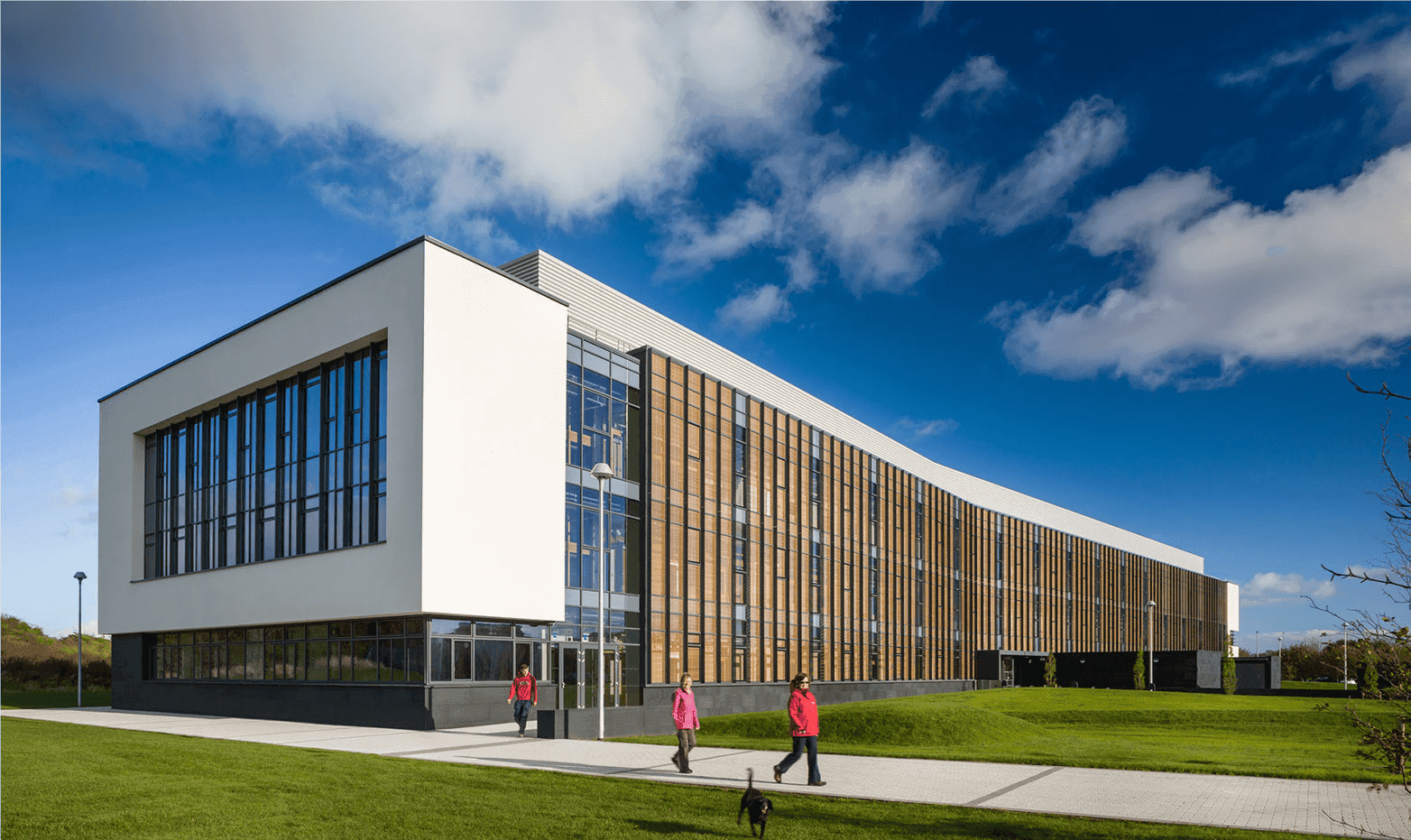
A building footprint that maximises natural light combined with facades that have been site-specifically designed to allow for maximum daylight penetration with a minimum of solar gain.
Facades have been designed to the reading room with a slim twin skin and integral blind for glare. This is a ventilated cavity that ensure heat build-up from the solar gain is dissipated at source.

The Outcome
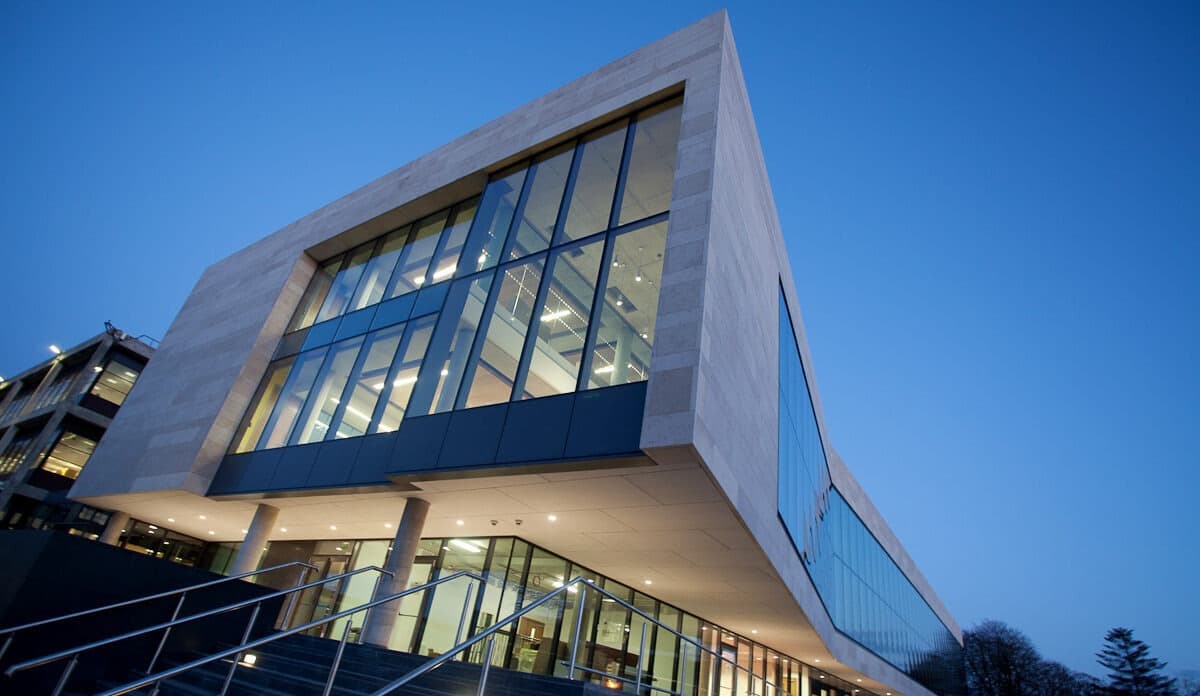
The completed extension is shaped by pedestrian routes and desire lines across the campus, creating a strong new entrance and improved connectivity between undergraduate and postgraduate facilities. A carefully considered massing and cantilevered form define the relationship between the existing library and the new addition. Material choices, including durable limestone cladding and robust external finishes, ensure longevity and visual coherence. The result is a contemporary research facility that enhances both performance and user experience while respecting its historic context.